Subscription businesses live and die by churn.
Acquire a subscriber for $40, lose them after 3 months, and you're barely breaking even. Keep them for 12 months, and they're worth 4x as much.
The challenge: subscription fatigue. What was exciting in month 1 becomes routine by month 4. The novelty wears off. Competitors send tempting offers. Life gets busy. The subscription slips to the cancellation list.
Physical inserts—the right ones, at the right time—can break this pattern. Each box is an opportunity to reinforce why they subscribed, celebrate their loyalty, and give them a reason to stay.
This guide covers 15 specific insert strategies for subscription businesses, organized by goal: retention, engagement, and growth.
For one-time purchases, you get one physical touchpoint. Make it count.
For subscriptions, you get recurring physical touchpoints. Every month (or week, or quarter), you're in your customer's hands again.
This creates unique opportunities:
Timing precision: You know exactly which box this is. Box #1, box #6, box #12. Each milestone can trigger different treatment.
Relationship building: Monthly touches compound. Small positive moments add up to strong loyalty.
Churn prevention: You can sense trouble (box #3 is high-churn for many businesses) and intervene.
Upsell opportunities: Subscribers are proven buyers. They're more receptive to upgrades and add-ons.
Most subscription brands send the same insert in every box—or no inserts at all. That's a missed opportunity.
What: Cards celebrating how long they've been a subscriber.
Examples:
Why it works: Recognition feels good. Celebrating milestones makes customers conscious of their tenure—and less likely to throw it away.
Trigger: Subscription order count = 3, 6, 12, 24
Best practice: Include something small with anniversary cards—a bonus sample, a discount, or a handwritten touch.
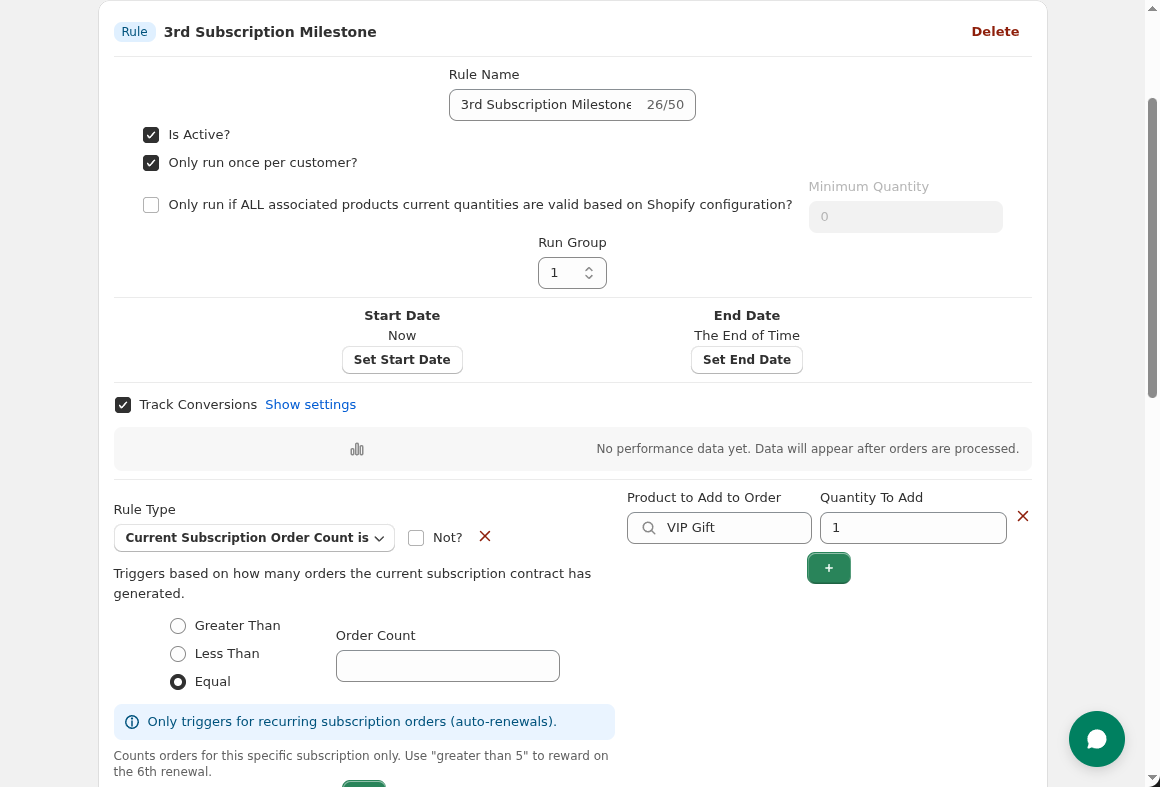 Create milestone rules that trigger on specific subscription order counts (3rd box, 6th box, etc.).
What: Exclusive discounts that only subscribers receive.
Examples:
Why it works: Exclusivity reinforces the value of being a subscriber. "If I cancel, I lose this."
Trigger: Every box, or strategically at churn-risk milestones (box #3, #4).
Best practice: Make the discount genuinely valuable and exclusive. If non-subscribers get the same deal, exclusivity means nothing.
What: Sneak peek of what's in next month's box.
Examples:
Why it works: Creates anticipation for the next delivery. If they're thinking about canceling, the preview gives them a reason to stay one more month.
Trigger: Every box.
Best practice: Show enough to excite but not so much that it eliminates surprise. Build anticipation, not spoilers.
What: Physical referral cards the subscriber can hand to friends.
Examples:
Why it works: Subscribers who refer are stickier—they've vouched for the brand publicly. Plus, referrals grow your subscriber base.
Trigger: Every box, or specifically box #2-3 when enthusiasm is high.
Best practice: Make the card physically share-able (not just a code to remember). People give cards, not memorized codes.
What: Tips specific to what's in this month's box.
Examples:
Why it works: Helps subscribers get more value from the box, increasing satisfaction and reducing "I don't know what to do with this" cancellations.
Trigger: Every box (content changes monthly).
Best practice: Match the tips to the specific products. Generic tips feel lazy.
What: Invitation to join the subscriber community.
Examples:
Why it works: Community creates belonging. Subscribers who engage with each other are far less likely to churn—they'd be leaving a community, not just a product.
Trigger: Box #1 or #2 (early community building).
Best practice: Make the community genuinely valuable—exclusive content, first access, direct connection to founders.
What: Request for input on their experience.
Examples:
Why it works: Customers who give feedback feel invested. You also get valuable data for improving the product.
Trigger: Box #2 or #3 (after they've experienced enough to have opinions).
Best practice: Keep it short. One question is better than ten. Make the input mechanism easy (QR to mobile-friendly survey).
What: Personal message from the founder about this month's box.
Examples:
Why it works: Personal connection with the humans behind the brand. Subscribers feel like they're supporting real people, not a faceless company.
Trigger: Every box, or periodically (quarterly).
Best practice: Make it genuinely personal. Printed "handwritten" notes that are obviously templated feel worse than no note at all.
What: Request for subscribers to share photos or stories.
Examples:
Why it works: Creates engagement beyond consumption. Subscribers who share become brand advocates. You get content for marketing.
Trigger: Box #1 (capture the excitement) and periodically.
Best practice: Feature submitted content visibly (website, social, future boxes). If contributors never see their content used, they won't submit again.
What: Cards acknowledging seasons, holidays, and special occasions.
Examples:
Why it works: Shows the brand pays attention and cares. Holiday acknowledgment feels personal.
Trigger: Calendar-based (December box for holidays) or subscriber-specific (anniversary of their first subscription).
Best practice: Keep it genuine and not overly promotional. A holiday card that's really a sales pitch feels cynical.
What: Offer to purchase additional items alongside the subscription.
Examples:
Why it works: Subscribers are proven buyers. Upsells to existing subscribers have higher conversion than acquiring new customers.
Trigger: Every box or when specific products align with subscriber preferences.
Best practice: Position as opportunity, not pressure. "You might also like" not "You need to buy this."
What: Offer to upgrade to a higher subscription tier.
Examples:
Why it works: Existing subscribers who upgrade increase revenue without acquisition cost. They've already validated product-market fit.
Trigger: Box #3-6 (after proving value, before fatigue sets in).
Best practice: Show concrete value difference. What exactly do they get in the upgrade? Make it tangible.
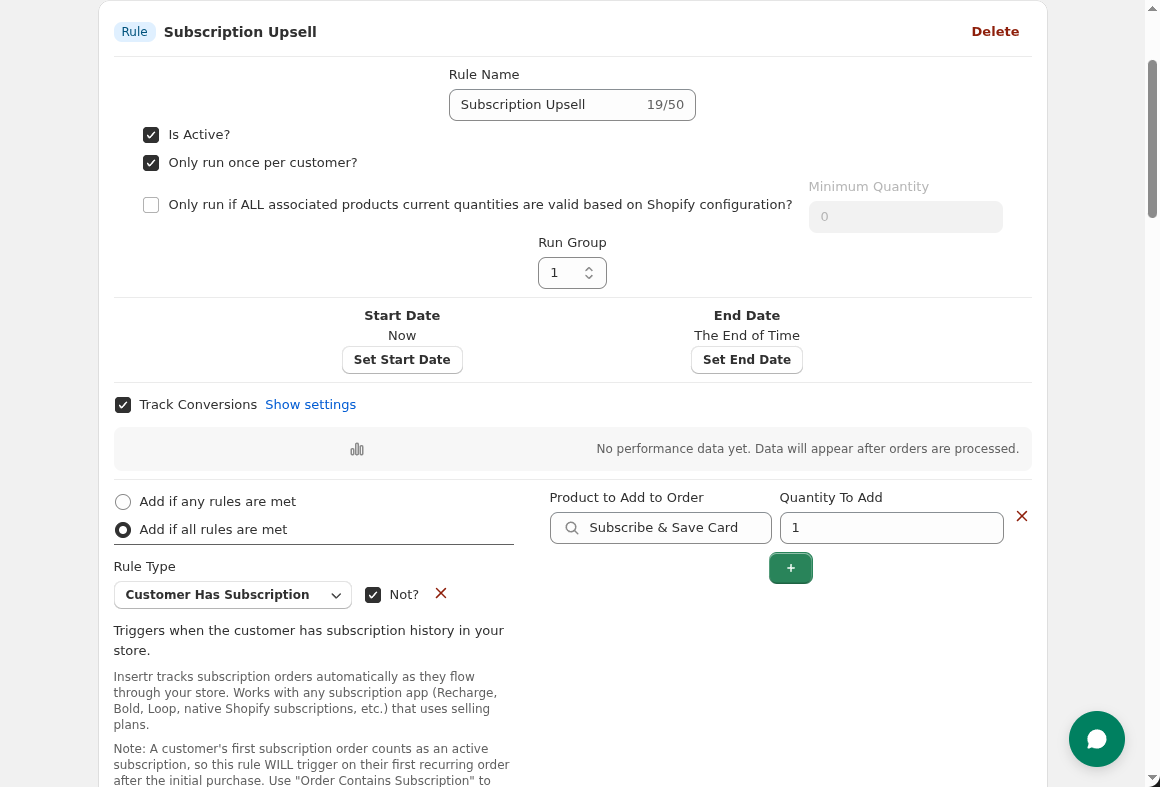 Target non-subscribers with subscription offers, or current subscribers with upgrade promotions.
What: Offer to gift a subscription to someone else.
Examples:
Why it works: Gift subscriptions acquire new subscribers through existing ones. The recipient often converts to paid after the gift ends.
Trigger: November-December boxes (holiday gifting), or before birthdays if you have that data.
Best practice: Include discount on gift subscriptions. Make the gift beautiful (premium card, envelope).
What: Offer to lock in a discounted annual rate.
Examples:
Why it works: Annual subscribers churn far less than monthly. You also get cash flow upfront.
Trigger: Box #4-6 (proven they value the product, ready to commit).
Best practice: Make the discount meaningful. 10% off isn't compelling. "2 months free" or "get the holiday box free" is more tangible.
What: Samples of products that pair with the subscription.
Examples:
Why it works: Cross-sells feel natural when they're truly complementary. "Since you like X, you'll love Y."
Trigger: Based on box contents or subscriber purchase history.
Best practice: The sample should genuinely complement. Random samples feel like you're clearing inventory, not personalizing.
Different moments in the subscriber lifecycle call for different inserts:
Goal: Set expectations, create excitement, begin relationship.
Inserts:
Goal: Deepen engagement before the "novelty wears off" danger zone.
Inserts:
Goal: Address the first major churn milestone (many subscriptions see spikes here).
Inserts:
Goal: Celebrate half-year mark, reinforce commitment.
Inserts:
Goal: Major milestone, recognition, retention for year 2.
Inserts:
The key rule type for subscription timing is Current Subscription Order Count, which tracks how many boxes a subscriber has received in their current subscription.
Example Rules:
Rule: 3-Month Milestone Gift
  Condition: Subscription Order Count = 3
  Insert: 3-Month Thank You Card + Small Gift
  Apply once: Yes

Rule: 6-Month Anniversary
  Condition: Subscription Order Count = 6
  Insert: 6-Month Celebration Card + Premium Gift
  Apply once: Yes

Rule: Churn Prevention (Box 4)
  Condition: Subscription Order Count = 4
  Insert: Subscriber-Exclusive Discount Card
  Apply once: Yes

Rule: Annual Anniversary
  Condition: Subscription Order Count = 12
  Insert: 1-Year Anniversary Gift Set
  Apply once: Yes
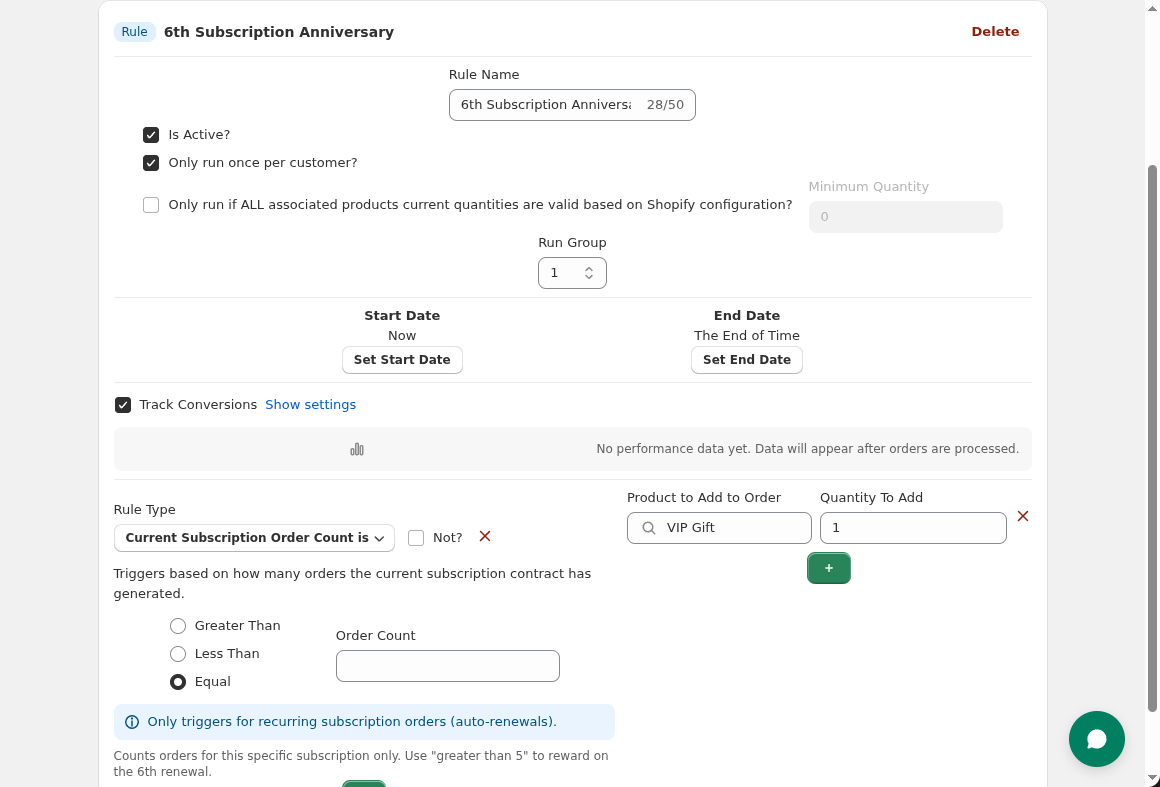 The 6-month anniversary rule triggers a celebration gift at the half-year mark.
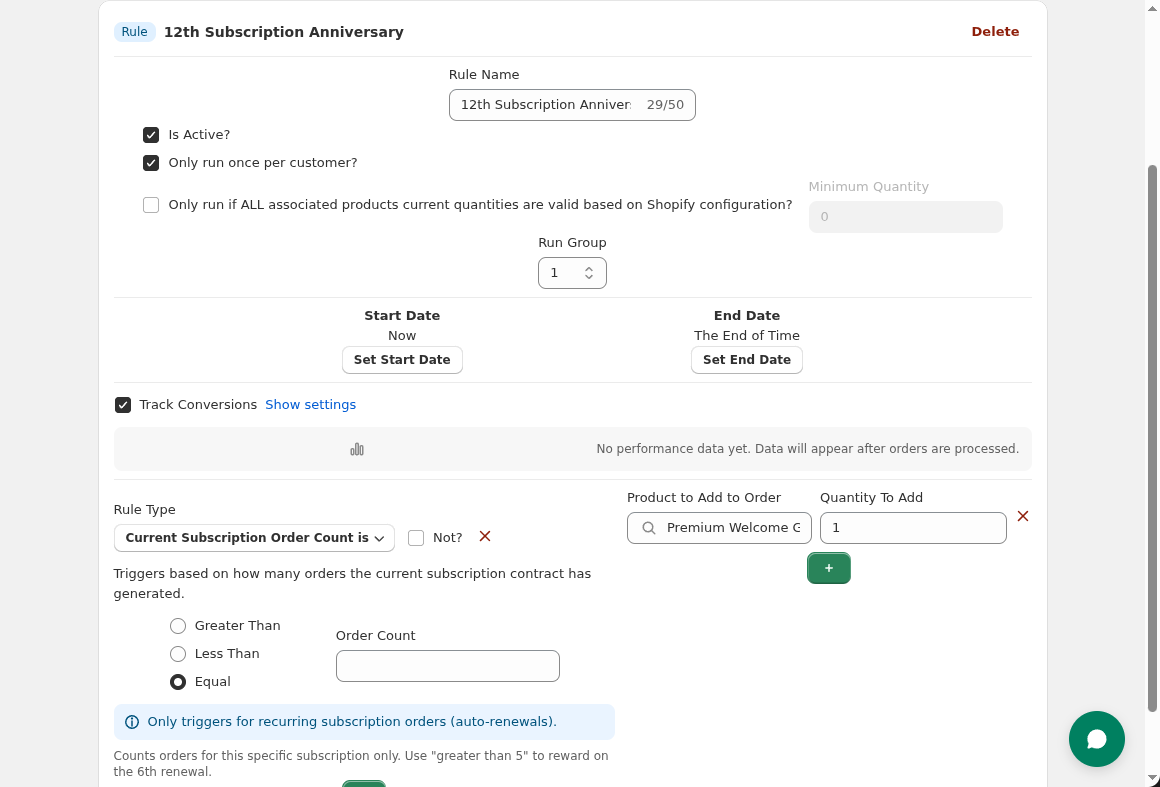 The annual anniversary rule sends a premium gift to celebrate one year of subscription.
Target customers who buy one-time products but aren't subscribed:
Rule: Subscription Upsell
  Condition: Customer Has Subscription = No
  Insert: "Subscribe & Save" Card
  Apply once: Yes
This insert goes in regular (non-subscription) orders, pitching the subscription option.
| Metric | What It Measures | How to Calculate |
|---|---|---|
| Churn rate by cohort | Did inserts reduce churn? | Compare churn rate of subscribers who received milestone inserts vs. those who didn't |
| Time to churn | How long do subscribers stay? | Average subscription tenure |
| LTV by treatment | Value difference | LTV of subscribers who received specific inserts vs. control |
| Upgrade rate | Do tier upgrade inserts work? | Upgrades ÷ Tier upgrade insert recipients |
| Referral rate | Do referral cards generate referrals? | Referrals ÷ Referral card recipients |
Test 1: Milestone Gift Impact
Test 2: Preview Card Effectiveness
Test 3: Discount vs. Relationship
The fastest way to create insert blindness. If every box has identical content, customers stop noticing.
Fix: Rotate inserts. Milestone cards at milestones. Previews monthly. Special occasions when relevant.
Box 3-4 is high-churn for most subscriptions. Doing nothing different is a missed intervention.
Fix: Add specific churn-prevention inserts at risk moments. Reinforce value, offer incentive.
Subscribers who refer become stickier. But if you never ask, they won't think of it.
Fix: Include referral cards regularly, but especially when enthusiasm is high (boxes 1-3, post-milestone).
Feels robotic and impersonal.
Fix: Make thank you messages specific. Acknowledge how long they've been subscribed. Reference their preferences if possible.
Every insert is an upsell or cross-sell. Feels transactional, not relational.
Fix: Balance promotional inserts with relationship inserts. A 2:1 ratio of relationship-to-sales is a good starting point.
Subscription churn is death by a thousand cuts. Small improvements compound dramatically over subscriber lifetime.
Physical inserts give you a recurring channel to reinforce value, celebrate milestones, and intervene at risk moments. Used well, they're a retention multiplier.
Your action plan:
Your subscribers want to stay. Give them reasons to.
Last updated: February 2026 | Author: Tom McGee, Founder of Insertr
About the Author: Tom McGee is the founder of Insertr and a former Senior Software Engineer at both Shopify and ShipBob. He founded Cool Steeper Club, a curated cold brew tea subscription box, where he used subscription inserts to reduce churn and increase referrals—experiencing firsthand which insert strategies actually work.